FORMER ADULT-FILM PERFORMER · ACTRESS, WRITER & PRODUCER
Ange Venus
Ange Venus is the adult-film name that came before Ange Maya, the credit she used when she moved into independent genre cinema as an actress, writer and producer. The two names meet in Empress Vampire, the 2012 vampire film in which she played Aleta and shared screenplay, story and producing credits with director Phil Condit. She choreographed its dances as well. A production announcement that year named her earlier adult career outright, tying the two halves of her public working life together.
Visit work archive
Partner brands





Ange Venus
An adult-film career followed by independent filmmaking
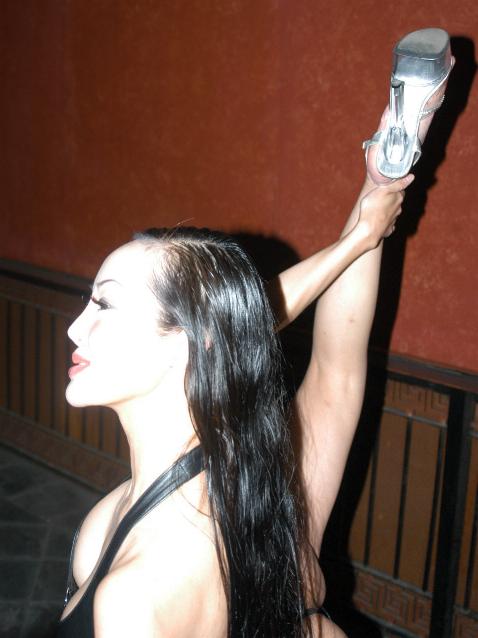
Under the name Ange Venus she appeared at adult-industry events, among them the XRCO Awards in April 2007. Photographs from that night record her attendance; no award win is attached to them. By the time Empress Vampire was being promoted in 2012, the production announcement described her as a former adult-film performer. Her later screen credits carry the name Ange Maya, a change that arrived with work stretching well beyond the front of the camera.
On Empress Vampire she carried the lead role and a share of the writing and producing. The press kit adds choreography, casting, art direction and Chinese translation, plus makeup for her own character, and lists her in the public-relations department. Condit's account of the collaboration describes her feeding him ideas and pushing for Laura Cotenescu as Ariana. The finished film also circulated as Aleta: Vampire Mistress.
Ange Venus, before the independent films
Ange Venus belongs to the adult side of her career: the name she worked under and the name attached to press photographs from industry nights. Two of those images come from the XRCO Awards of 5 April 2007 and show her at the ceremony; they say nothing about a trophy. Five years later, the July 2012 announcement for Empress Vampire introduced her as the film's lead and, in the same breath, identified Ange Maya as the former Ange Venus. That sentence is the hinge between the two careers.
A job ad, a stalled project, a vampire film
The collaboration began with an advertisement. Maya was looking for a cinematographer; Condit answered. Their first plans never turned into a finished film, and a separate vampire project fell apart too. What survived was the idea of a vampire film with her in the lead, so they decided to make it themselves. Condit's telling is matter-of-fact about the false starts, which makes the eventual film look less like a lucky break and more like something the two of them willed into production.
Writing as a conversation
Condit started with a vampire story of his own. Maya kept sending ideas, and by his account some went straight in while others needed argument before they could sit inside the plot. When the credits were drawn up, both names appeared for screenplay and story. Her ideas also pulled the film towards musical sequences, which is unusual for a vampire picture and gives the finished thing some of its character. The writing credit is not a courtesy: it reflects a script that took shape between two people.
Producing, and a casting argument
Maya shares producing and executive-producing credits with Condit, and the press kit lists them both as casting directors. Condit recalled one exchange in particular: he had a different part in mind for Laura Cotenescu, and Maya wanted her as Ariana. She got her way. The detail is small, but it shows the kind of decisions she was part of, well beyond showing up to play Aleta.
Dances in a horror film
The choreography is Maya's. Condit gives her the credit for proposing music in the first place, which led to a group dance and a separate song-and-dance sequence. He thought about dropping one number from the domestic version and changed his mind once he heard the recording. The result is a vampire film that occasionally behaves like a musical, a contrast that comes directly from her involvement.
One role, a long list of credits
As Aleta she carries the film, but the press kit records far more: art direction, Chinese translation, makeup for her own character, and a place in the public-relations department alongside other names. Those are tasks on one production, not a claim that she did everything. Condit, for his part, is credited for camera, editing and effects, and the crew list gives other people their own specialised work. Read together, the credits describe a small production where several people wore several hats.